Pyrmont and Ultimo are shaped by layers of history, from their Aboriginal heritage and early colonial settlement to busy industrial and working-class communities.
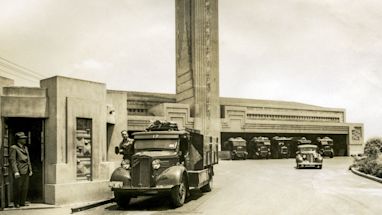
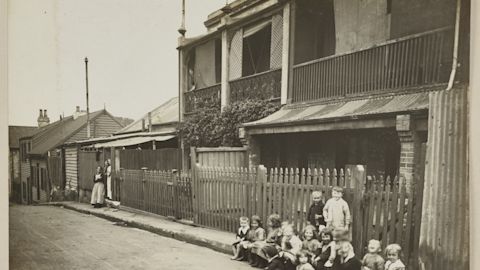
Known today for apartments, parks and waterfront living, the neighbouring suburbs were once defined by quarries, wharves, wool stores and industry. Their streets were home to generations of workers and families who helped shape Sydney.
Inspired by this year’s History Week theme, ‘Keeping Stories’, our historians have revisited interviews with former residents and workers. Their memories offer a rich picture of everyday life in the area, from sugar factories and sheep sales to swimming at the Pyrmont Baths and neighbours gathering in the street.
These personal stories reveal how the suburbs looked and what it felt like to live there. By preserving these voices, we keep their stories alive and ensure the history of these inner-city suburbs continue to be remembered, shared and valued.
Sugar work and community spirit

When Arthur Cox's father moved to Pyrmont in 1919 to work at the Colonial Sugar Refining Company (CSR), he was following a path familiar to many local families.
Arthur's father and most of his 10 siblings worked at CSR, while his mother battled factory soot that regularly settled on the family's washing from nearby factories.
After losing his job at the General Post Office (GPO) during the Depression, Arthur joined CSR in 1934 at just 16 years old. Over the years, he worked in several roles, including the laboratories where he tested sugar crystals and golden syrup.
Arthur remembered a close-knit community where many residents worked in wool stores, timber yards, on the wharves or at CSR.
Among his favourite memories were the sugar workers' picnics, complete with races, ice creams and lollies, as well as Dixieland dances and afternoons at the Pyrmont Baths.
Listen to Arthur’s full oral history interview
The day sheep walked through Ultimo

Born in 1916, George Cairns remembered seeing up to 100 sheep being driven through Ultimo after arriving at Darling Harbour.
The animals were walked from the harbour to nearby wool stores, creating a spectacle that was once a regular part of life in the area.
George also recalled the bustling wool sales and the activity that surrounded them, giving insight into Ultimo's role in Sydney's industrial economy.
His memories weren’t all about work. As a teenager he witnessed the territory wars between Ultimo, Pyrmont and Glebe gangs. One of the famous and most feared based on Macarthur Street and Bulwara Road was named the Dirty Dozen. Coming home for dinner after a day at the Pyrmont baths was often a challenge.
Like many families during the Depression, George and his brothers found creative ways to get by. They collected fruit discarded at local markets, cleaned it up and sold it to neighbours.
Listen to George’s full oral history interview
Pie and peas, wool stores and neighbours helping neighbours

Shirley Puckeridge lived her whole life in Ultimo and Pyrmont. In her interview, she provides a vivid account of growing up in Ultimo until she married and moved to Pyrmont. Shirley worked locally as a tailor while her husband Kenneth was a waterside worker.
Families in the area were generally large and living conditions were often crowded. Siblings shared rooms and houses were shared with other families too.
Shirley talks fondly about the family’s Friday night outings to the markets for pie and peas and chips, going to Wattle Street business Cooking Sons to buy chooks. In the evenings, neighbours tended to gather on the street. The kids often went to the local woolstore and played inside.
Like many former residents, Shirley recalls the Pyrmont Baths as an important social hub where families gathered, children swam and friendships formed. Most of all, she remembers a community where people supported each other.
Listen to Shirley’s full oral history interview
About our oral history collection
The collection contains almost 700 recorded interviews dating back to the 1980s and continues to grow.
It captures the experiences of people from all walks of life and helps preserve stories that might otherwise be lost. More than 200 interviews are available online through the City of Sydney Archives and history resources catalogue.
Published 1 September 2026