In 2026, the City of Sydney Archives celebrates its 50th anniversary. The first professional archivist started work on 5 July 1976. They managed a remarkable collection of volumes, documents, maps, plans and images, dating back to 1842, when the municipality of Sydney was formed.
Archives can be vulnerable to neglect, environmental hazards and even deliberate destruction. Fortunately, the City of Sydney has benefited from generations of custodians — both staff and members of the public — who recognised the value of these records and worked to protect them, even before the City of Sydney Archives formally existed.
Many of these heroes of the archives are lost to time, but some we can pinpoint, often through the records that survive.
Here are just some of the people whose efforts helped safeguard the Sydney’s history.

Early town clerks
From the earliest days of the municipality, the town clerk’s department played a central role in recordkeeping.
As early as 1843, records were stored securely in a dedicated strong room containing “deeds, muniments and records of the Corporation”. Correspondence was carefully managed, with letters received and letters sent recorded, indexed and tracked. Minutes and reports of Council and its various committees were also kept, mostly in bound volumes.
These systems weren’t perfect, but they established a culture of order and accountability that ensured many of these early records survived — often in remarkable condition.
One standout figure was John Rae, the second town clerk (1843–1853), who helped establish early recordkeeping practices. Rae was also an artist, known to doodle in draft Council minutes — a small but human glimpse into the historical record.

George Burnett Barton
Historian and journalist George Burnett Barton was an early public advocate for access to the City of Sydney’s records. He was the elder brother of Sir Edmund Barton, the first Prime Minister of Australia.
In 1895, he suggested building a dedicated records room at Sydney Town Hall, where historical documents could be gathered for research. He recognised their value for administration and understanding Sydney’s development.
He wrote “such a collection might be made one of great interest and value and would well replay the time and labour bestowed upon it. The maps and views of Old Sydney, for instance, would illustrate the growth of the City from its foundation day.”
Although a public reading room wouldn’t open until the late 1970s, Barton’s vision anticipated the modern role of the City of Sydney Archives as a resource for its communities.

Mayor Matthew Harris
A special meeting of Council in 1898 mentioned that a former mayor, possibly Mayor Isaac Ellis Ives, requested building a large strong room in Sydney Town Hall and a burglar-proof safe for valuable records.
It was left to his successor Mayor Matthew Harris to make the strong room a reality. The city building surveyor prepared a report about constructing a 3-compartment, fireproof strong room in the landmark’s basement.
In 1899, the Works Committee set about organising its construction. The strong room housed the most valuable “historical records” and other key documents. It was opposite the Mayor’s wine collection and eventually the records took over the wine cellar as well. A guard checked records in and out from 1925. Records were stored in the vaults for more than 100 years, before being moved to the Government Records Repository.
This investment in secure storage played an important role in the survival of many historical records now held in the City of Sydney Archives.

Roy Hendy, town clerk
During World War 2, town clerk Roy Hendy and his team took decisive action to protect the most important records.
The town clerk in Orange was contacted and the Bank of NSW agreed to accept the City of Sydney’s records to distribute them across regional areas. Some records were photocopied or duplicated onto microfilm (referred to as ‘miniature records’), with working copies kept in Sydney. Other valuable plans and field books were transferred to the town clerk’s strong room. From 1942, records were transferred for storage at Narromine, Molong, Carcoar and Mandurama.
Hendy determined in July 1943 that the imminent threat had passed, and the records were returned from the country and stored at Sydney Town Hall’s strong room. These protected records now form part of the City of Sydney Archives.

Des Cramp
Des Cramp, former employee in the planning and building department, played a crucial role in preserving the City of Sydney’s photographic heritage.
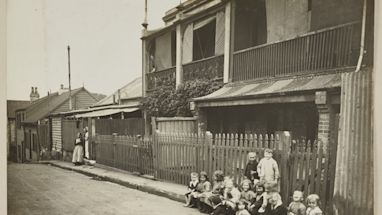
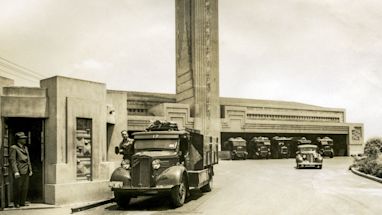
In January 1900, the Australian Historical Society (now the Royal Australian Historical Society) lobbied for the City of Sydney to take photographs ‘of all condemned buildings, or old landmarks about to be removed’. The request was approved and photographers were hired to take glass negatives. These were printed and pasted into albums, called Demolition Books.
While originally documenting condemnations and demolitions (to the 1930s), the Demolition Books were expanded to include renovations and constructions by the City of Sydney (up to 1949).
By the early 1970s, glass plate negatives used to produce the Demolition Books were neglected, discarded or broken by some staff members, who didn’t recognise their value. Cramp collected surviving boxes of glass negatives and drove them to the Mitchell Library for safekeeping.
They were returned in 1995 and are now being re-digitised, allowing for greater detail and improved access. They’re the jewel in the crown of the City Archives.

City archivists and staff
Since 1976, city archivists and their teams have been at the forefront of preserving and sharing Sydney’s history. Over 5 decades, they’ve developed policies and systems, improved storage conditions, expanded public access, and embraced digitisation and digital preservation. Today, the City of Sydney Archives provides an award-winning catalogue and public reading room, and takes part in festivals, exhibitions, talks and workshops. Around 30,000 people a month use its catalogue.
Supported by dedicated staff and volunteers, the City of Sydney Archives continues to make Sydney’s history available to all. Hear more from our current and former City Archivists.
Explore the collection
Discover the stories preserved in this extraordinary collection.
Published 6 July 2026, updated 10 July 2026