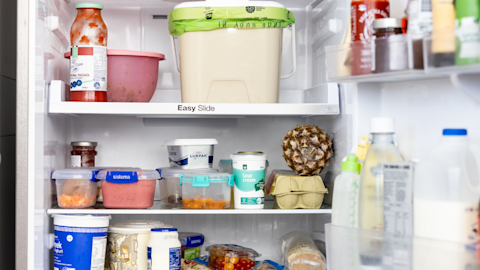
Who knew storing carrots in water in your fridge keeps them nice and crisp?
Or that you should separate onions and potatoes because they spoil faster together.
These hot tips will help you keep food fresher for longer.
Use your fridge to its full potential
Where you store your food in the fridge can make a bigger difference than you might think. Different shelves and drawers run at different temperatures.
- Freezer – prevents spoilage and preserves nutrients. Freeze your leftovers in meal-sized portions.
- Top shelf – easy access zone for ready-to-eat meals. Try storing meals in clear containers. If you can see it, you’ll eat it.
- Middle shelf – Stable temperature best for dairy products. A great spot to create a ‘use it first’ zone, so nothing gets forgotten.
- Bottom shelf – Coldest area of your fridge. For raw proteins, preventing cross-contamination.
- Crisper drawer – Maintains humidity and can help keep produce fresh longer.
Vegetables

Broccoli and cauliflower
Store your unwashed broccoli and cauliflower in an open plastic or reusable produce bag in the crisper drawer. This way the vegetable will be able to breathe and your fridge drawer will stay tidy.
Carrots
Store your carrots in a sealed container, with a shallow layer of water at the bottom. Replace the water when it becomes cloudy, about every 4 to 5 days.
Celery
Remove the leaves, wrap in a clean damp tea towel and place in an airtight container or plastic bag in the crisper drawer of your fridge.
Garlic
Store in the pantry, away from moisture, heat and direct sunlight. Keep them away from other vegetables so they last longer.
Leafy green vegetables
Vegetables such as lettuce, kale and spinach can be wrapped in a clean tea towel or paper towel and placed in an airtight container or plastic bag in the fridge.
Potatoes, sweet potatoes, onions, shallots
They love a cool, dark place in your pantry, away from moisture, heat and sunlight. Separate potatoes from onions and shallots as they spoil faster side by side. You can put an apple with your potatoes to prevent sprouting.
Pumpkin
Store whole pumpkins upside down in a cool, dark place. Pumpkins at risk of spoiling can be chopped into bite-sized cubes and stored in ziplock bags or containers in the freezer.
Zucchini
If you plan to cook them within a few days, the best way to store them is on the counter at room temperature. If you plan to use them later, store them in a paper bag in the crisper drawer of the fridge.
Herbs

Mint, basil
Store in a glass of water on the kitchen bench.
Parsley, coriander, chives, sage, rosemary, thyme
Wrap in a clean damp tea towel and place in an airtight container or cover with a plastic produce bag in the crisper drawer of the fridge.
For longer-term herb storage, finely chop them and place in ice cube tray wells, covered with olive oil or water. Freeze overnight then transfer to labelled containers or ziplock bags to store in your freezer.
Dairy, eggs and bread
Cheese
Plastic wrap seals in moisture and invites mould. Instead, cover your cheese with beeswax or baking paper so it can breathe and stay fresh.
Eggs
Keep eggs in their carton and store them on the middle or bottom shelf of your fridge so they stay cooler and fresher longer. To check freshness, place them in water. Fresh eggs will sink and bad eggs will float.
Milk
Keep milk on the lower shelves of your fridge where it’s consistently cool. Don’t store it in the door – that’s the warmest part of the fridge.
Yoghurt, cottage cheese, sour cream
Flip containers upside down before storing in the fridge. This creates a vacuum seal that slows mould growth.
Bread
Store your bread in the freezer instead of the fridge to avoid it becoming mouldy and stale.
Pantry staples
Plain flour
Place a bay leaf in your flour tin to prevent pantry bugs.
Brown sugar
Keep a marshmallow in your brown sugar to prevent hardening.
Despite our best intentions, we all have a little food waste sometimes. Learn more about our food scraps recycling service and put your scraps to good use.
Published 26 January 2023, updated 5 May 2026